Make-up lessons: practise on your own face
A make-up lesson is worth the price only when you do the work yourself, not when you watch someone else do it: groups capped at 4 to 6 people, a mirror and light at your own seat, and your own make-up bag as the starting point. In a typical 3 hour class that buys 3 topics of 50 to 60 minutes each, which is enough time to practise a technique with correction rather than just see it demonstrated once.
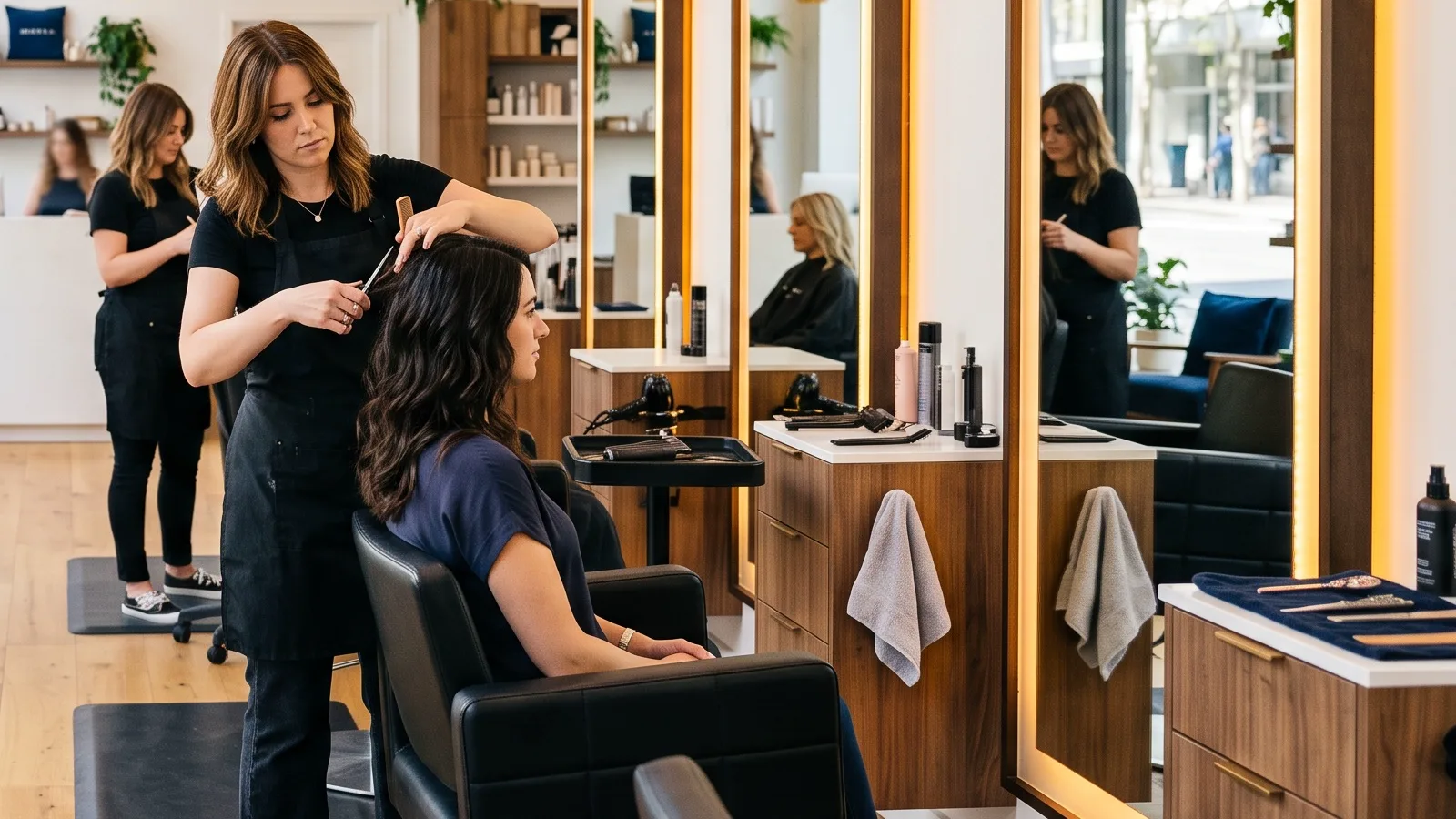
What separates a lesson from a demonstration
The first thing to check before booking is the number of people in the room. Once a group passes 6 participants, most of the time goes to watching the tutor work on one face rather than practising on your own, and the second kind of time is the whole point of a lesson. A group of 4 to 6 keeps every seat within reach for correction, and it keeps the room quiet enough that a mistake gets noticed and fixed rather than repeated for an hour.
The second thing is the seat itself. You need your own mirror and light that comes close to daylight, because foundation, concealer and blusher read differently under a warm ceiling spot than they do by a window, and daylight is closer to how the finished look will appear outside the room. The third is what you bring. A useful lesson starts from your own make-up bag, so the skill you take home is using what you already own better, not adding more products to a bag that may already hold 15 or 20 items. A class built almost entirely around a single brand's range is a sales event, not a lesson, and the price should reflect that difference: a brand-led evening often costs 20 to 40 EUR less than an independent class, but it also buys far less time in front of the mirror with a tutor who is not selling anything.
| Format | Group size | Duration | Best for |
|---|---|---|---|
| Group lesson | 4 to 6 people | 3 hours | Foundations and technique |
| Topics per group lesson | 3 topics | 50 to 60 minutes each | Hands-on practice with correction |
| Private lesson | 1 person | 60 to 90 minutes | One specific question |
| Colour consultation | 1 person | 60 minutes | Choosing shades |
| Refresher lesson | 1 person | 45 to 60 minutes | Revisiting technique after a change |
What fits into a three hour class
Three hours gives room for 3 topics, and each needs its own 50 to 60 minutes: base and concealing, eyes, then brows and lips. Most tutors open with a short round of introductions and a quick look at each face, about 10 minutes, before the first of the 3 topics begins, and that block has to hold an explanation, a demonstration on one volunteer and your own practice with correction. A class that promises 5 or 6 topics inside the same 3 hours is cutting the one part that actually changes your result, the practice.
What stays with you afterwards is the handling, not a list of product names: how a brush is loaded, how much product goes onto the bristles before the first stroke, how a hard edge is blended into skin, and the order the steps are done in. Those 4 points change the finished look more than any new purchase, and a good tutor has you repeat the base and eye steps at least 2 times, once slowly with guidance and once at normal speed, so the movement is practised rather than only shown once.
A colour consultation is a separate, shorter service: about 60 minutes to work out which shades of foundation, blush and lip colour suit your undertone, usually with little hands-on practice. It answers a different question, which shade, rather than how a look is built, so treat it as a complement to a lesson rather than a substitute for one.
Who benefits most, and when a private hour works better
A group lesson pays off most for people who have used roughly the same routine for years and are not happy with the result, for anyone returning to make-up after a long break, and for anyone whose face has changed through age, weight change or a new pair of glasses. In each case the old handling no longer fits the current face, and a taught session resets it faster than months of trial in front of the bathroom mirror.
A group is the wrong format when there is one specific problem to solve, such as concealing a patch of redness or applying eyeliner over a hooded lid. A private lesson of 60 to 90 minutes gives a tutor time to look at that one issue from a few angles and adjust the technique to your face, which a 10 minute slice of a 6 person class cannot do. A single private hour usually costs 60 to 120 EUR, not far from what one seat in a 3 hour group class costs for an evening, so the choice comes down to the kind of help you need rather than the price alone.
Hygiene when you share a room and bring your own bag
Bringing your own products also means checking them before the lesson, especially anything new. A basic patch test is simple: apply a small amount of the product to a patch of skin, leave it for 48 hours, and watch for redness, itching or swelling, since a reaction can still appear as late as 96 hours after contact. Preservatives and fragrance, and less often hair dye and nail varnish hardeners, are the cosmetic ingredients most often behind a reaction, so any product with a long ingredient list deserves the wait. Most tutors ask you to bring at least 5 to 8 items to cover base, eyes, brows and lips, and to label anything that might be tested on more than one face in the room.
The other side of hygiene is age, not allergy. Mascara is worth replacing after about 3 months of regular use, because studies have found bacteria on brushes used beyond that point, and most other eye products should follow a similar rhythm even though their printed shelf life after opening often runs to 9 or 12 months. In a lesson where brushes and testers are shared, wipe or spray clean anything that is not exclusively yours, and never let a shared product touch the lash line or lip directly.
Questions to ask before you book
- How many people will be in the group, and is 6 really the maximum?
- Will I have my own mirror and light close to daylight, not just a shared one?
- Can I bring my own make-up bag, or is the class built around one brand's products?
- How much of the 3 hours is practice on my own face rather than watching a demonstration?
- If I only have one specific question, is a 60 to 90 minute private lesson available instead?
Frequently asked
How many people should be in a make-up lesson?
No more than 4 to 6. Once a group is larger, most of the time goes to watching the tutor rather than practising on your own face, which is the actual value of the lesson.
Should I bring my own make-up bag?
Yes. A good lesson teaches you to use what you already own better, and a class that only shows one brand's products is closer to a sales event than a lesson.
What can a 3 hour lesson realistically cover?
About 3 topics at 50 to 60 minutes each: base and concealing, eyes, then brows and lips, with explanation, demonstration and your own practice inside each block.
When is a private lesson better than a group class?
When one specific question is the reason for booking, such as concealing redness or applying eyeliner over a hooded lid. A private lesson of 60 to 90 minutes gives a tutor time to work on that one issue.
How do I check that a new product will not irritate my skin?
Apply a small amount to a patch of skin and leave it for 48 hours, watching for redness or itching; a reaction can still appear up to 96 hours after contact.
How often should I replace mascara?
About every 3 months. Bacteria have been found on brushes used beyond that point, which makes it one of the few make-up items worth replacing on a schedule rather than waiting for it to run out.
Sources
- When to toss your makeup and sunscreen (American Academy of Dermatology) · mascara replacement at about 3 months, bacteria found on brushes used longer, Period After Opening symbol
- Patch tests (DermNet) · patches applied for 48 hours, read at 96 hours, baseline series identifies about 70 percent of contact allergies
- Contact dermatitis, causes (NHS) · preservatives, fragrance, hair dye and nail varnish hardeners named as common cosmetic allergens
Read on
 Make-up
: the same steps, three intensities
Make-up
Make-up: the same steps, three intensities
 Make-up
Bridal make-up: the trial decides
Eyes, Brows, Lashes
Eyebrow shaping: three points, one arch
Make-up
Bridal make-up: the trial decides
Eyes, Brows, Lashes
Eyebrow shaping: three points, one archTools that fit
This guide is for general information. It does not replace medical or professional cosmetic advice or an examination.