Bridal make-up: the trial decides
A bridal make-up trial, not the wedding morning itself, is where the look actually gets decided: booked 4 to 8 weeks before the day, it runs 60 to 90 minutes and tests foundation, colour and staying power under the same light the ceremony will use. Skipping it saves an hour now and risks losing the morning later, because a base that looks settled at 10am can shift by 3pm and read differently once a camera flash goes off.
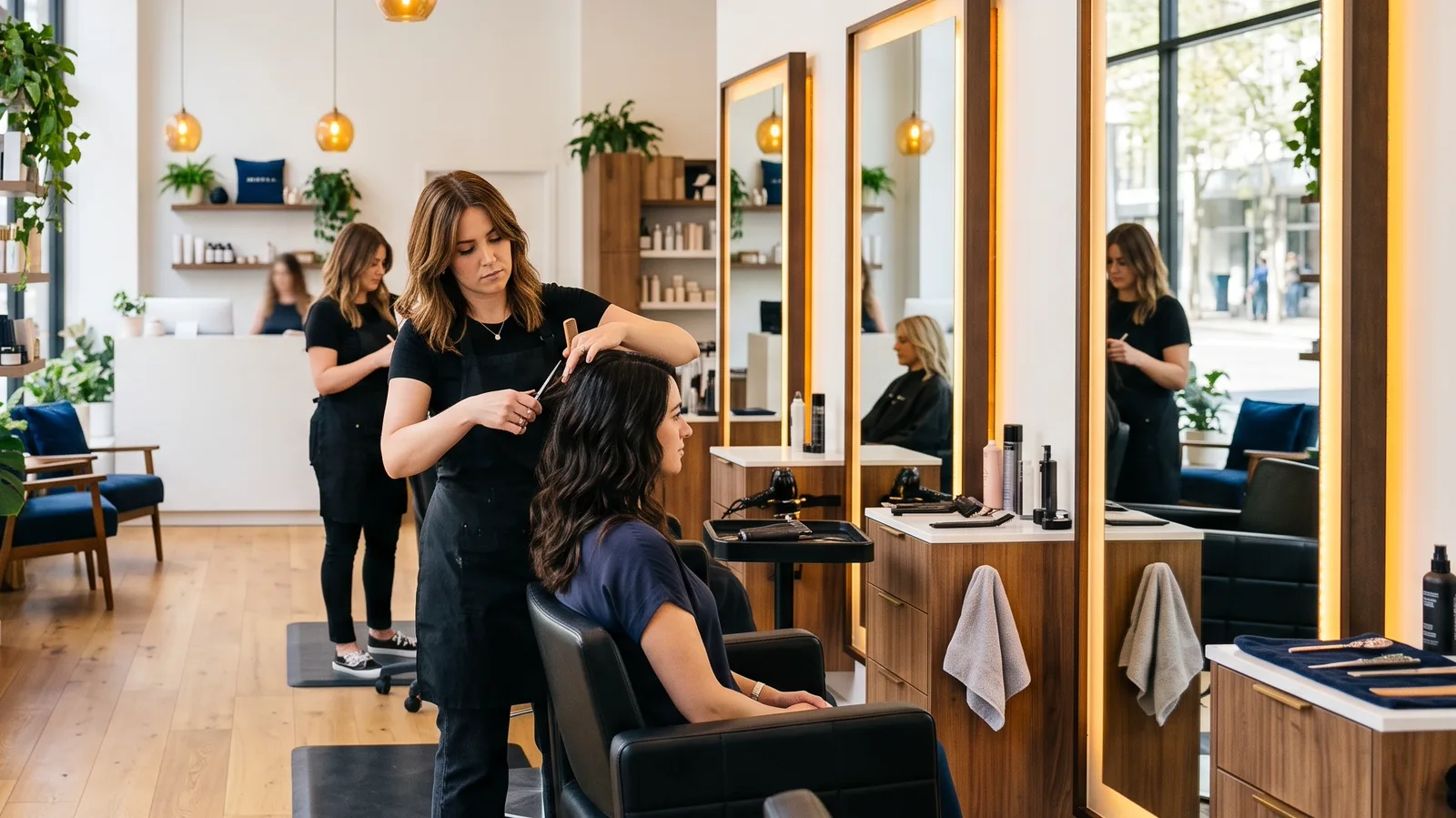
The trial appointment
The trial sits 4 to 8 weeks ahead of the wedding and takes 60 to 90 minutes, long enough to test a base, set the colour palette and check how the finish holds. A sensible add-on costs nothing: wear the look for a normal day afterwards and look at it again after 8 hours, in daylight and under a phone flash, because a foundation that reads matte at midday can pick up shine well before an evening reception.
Bring the essentials rather than describe them: a swatch or photo of the dress, the jewellery that will actually be worn and a note on the hairstyle, since a bright white gown usually favours cooler tones while ivory or champagne fabric needs a warmer base by a shade or two. Skipping this step is a common reason a second trial gets booked, adding another 60 to 90 minutes and a second appointment fee to the schedule.
Most artists charge for the trial separately from the wedding day fee, and a typical range sits somewhere between 50 and 150 EUR depending on the region and how many looks are tested in the same session. For a destination wedding, the trial usually has to happen at least 3 to 4 months out, since the artist and the couple are rarely in the same city more than once before the day itself.
| Step | Time needed | When it happens |
|---|---|---|
| Trial appointment | 60 to 90 minutes | 4 to 8 weeks before the wedding |
| Home patch test of new products | 7 to 10 days | before the trial appointment |
| Bride's make-up on the day | 60 to 90 minutes | scheduled in the middle, not last |
| Bridesmaid or parent's make-up | 30 to 45 minutes each | before or after the bride |
| Buffer before the photographer | at least 30 minutes | straight after the last face is finished |
| Touch-up kit check | 5 minutes | handed to the maid of honour, not the bride's bag |
Building the day's timetable
Most artists count 60 to 90 minutes for the bride's face on the wedding day itself and 30 to 45 minutes for each additional person, whether that is a maid of honour, a mother of the bride or a second bridesmaid. Four attendants at 30 to 45 minutes each already add up to 2 to 3 hours before the bride's own session even starts, so a single make-up artist needs the full list of names in writing before the booking is confirmed.
The bride is usually scheduled in the middle of that list, not last: finishing too early risks 2 to 3 extra hours of wear before the ceremony, while finishing last leaves no room if someone runs 15 or 20 minutes over. A 20 minute delay at 8am has a habit of becoming an hour by midday once hair, dressing and photographs stack on top, so most working timelines build in at least 30 minutes of buffer before the photographer is due.
Hair usually runs alongside make-up rather than after it, and a wedding party of 6 people, one bride and 5 others, can turn into a 4 to 5 hour block once both services are counted together. Booking a second artist once the party passes 4 or 5 people is common practice, since one person working alone for more than 4 hours in a row tends to lose the sharpness of the earlier looks by the final face.
Longevity, flash and tears
Shine control matters more on a wedding day than on almost any other booking, because guests take photographs for 6 to 8 hours under mixed light. Setting powder on the T-zone and blotting papers used every 2 to 3 hours deal with most of it, while a flash-aware base avoids foundations built around a high SPF, since mineral filters above SPF 30 can reflect a camera flash back as a pale, chalky cast even though the skin looks fine to the naked eye.
For the ceremony itself, waterproof mascara and a small pot of concealer for touch-ups cover the two moments most likely to need repair, tears and a shiny nose. That touch-up kit belongs with the maid of honour rather than in the bride's own bag, and a kit under 200 grams easily holds a travel mascara, a folded pack of blotting papers and a concealer stick.
Heat and humidity shorten every one of those numbers: a base that holds for 8 hours in a 20 degree venue can start breaking down after 4 to 5 hours outdoors at 28 degrees or above, which is why a summer or destination wedding is exactly when the 8 hour test-wear at the trial earns its place. A lightweight primer under the base and a single layer of translucent powder, rather than several heavy ones, tends to survive heat better than a thick full-coverage layer reapplied every hour.
Testing new products before the big day
Any product going on the face for the first time deserves a patch test well before the wedding, not the morning of it. One straightforward method is to apply a quarter sized amount twice a day for 7 to 10 days to a spot such as the inner arm or the bend of the elbow, and to stop at the first sign of redness, itching or swelling. A trial booked 4 to 8 weeks out leaves comfortable room for this test plus a follow up appointment if a product needs swapping.
Anyone with a history of reactions can ask a dermatologist for a formal test instead: a set of patches is applied for 48 hours, the skin is read at that first return visit and again roughly 2 days later, so the full process runs across 3 appointments over about a week. Full ingredient labelling is one reason this works at all, since EU rules require every pack to list ingredients in descending order by weight, so a known allergen can be checked before it goes near a trial or a wedding morning.
Timing also matters for a second reason: a patch test needs 7 to 10 clear days on the skin, so it has to start at least 1 week before the trial, not the night before. Anyone travelling for a destination wedding should run the test at home first, since 2 to 3 days in a different climate is rarely enough to tell whether a reaction is the product or the change in water and air.
Questions to bring to the trial
- What SPF level is in the base, and does it leave a cast under flash?
- How does the look photograph after 8 hours and under flash?
- Which products are new, and were they patch tested at least 7 days ago?
- Who carries the touch-up kit, and what is in it?
- What time does the photographer arrive, and where does the bride sit in the schedule?
Frequently asked
When should I book the bridal make-up trial?
Book it 4 to 8 weeks before the wedding, not the week itself. That leaves time for a second trial and for patch testing any new product for 7 to 10 days beforehand.
How much time should I set aside on the wedding day?
Plan 60 to 90 minutes for the bride and 30 to 45 minutes for each bridesmaid or parent, plus at least 30 minutes of buffer before the photographer arrives.
What should I bring to the trial?
A swatch or photo of the dress, the jewellery that will be worn and a note on the hairstyle. A bright white gown usually favours cooler tones while ivory or champagne fabric needs a warmer base.
How do I stop shine and smudged mascara showing in photos?
Setting powder on the T-zone, blotting papers every 2 to 3 hours and waterproof mascara cover most of it. A small touch-up kit with the maid of honour handles the rest.
Do I need to patch test new make-up before the wedding?
Yes, especially anything new. Apply a quarter sized amount to the inner arm twice a day for 7 to 10 days and stop at the first sign of redness or itching.
Can sunscreen in the foundation cause a white cast in flash photos?
Mineral filters above SPF 30 can reflect a camera flash back as a pale cast even when the skin looks fine in normal light, so this is worth raising at the trial.
Sources
- Regulation (EC) No 1223/2009 on cosmetic products, Article 19 · labelling and ingredient list requirements, including descending order by weight
- How to test skin care products before you use them · American Academy of Dermatology patch test method, 7 to 10 days on the inner arm
- Patch testing · British Association of Dermatologists, clinical patch test timeline over three visits
Read on
 Make-up
: the same steps, three intensities
Make-up
Make-up: the same steps, three intensities
 Make-up
 lessons: practise on your own face
Make-up
Make-up lessons: practise on your own face
 Skin and Cosmetics
The facial: eight steps, one result
Skin and Cosmetics
The facial: eight steps, one resultTools that fit
This guide is for general information. It does not replace medical or professional cosmetic advice or an examination.