Lomi Lomi: long strokes with the forearm
Lomi Lomi Nui, the Hawaiian bodywork tradition, works mainly with the forearms rather than the hands, drawing long strokes that can run 60 to 90 centimetres in one sweep, from the sacrum across the back to the shoulder and down the arm. A session lasts 60 to 90 minutes, sometimes 2 hours or longer in the traditional form, and treats the body as one connected surface rather than a set of separate muscles. That whole-body sweep is what separates it most clearly from a classical massage, which works section by section.
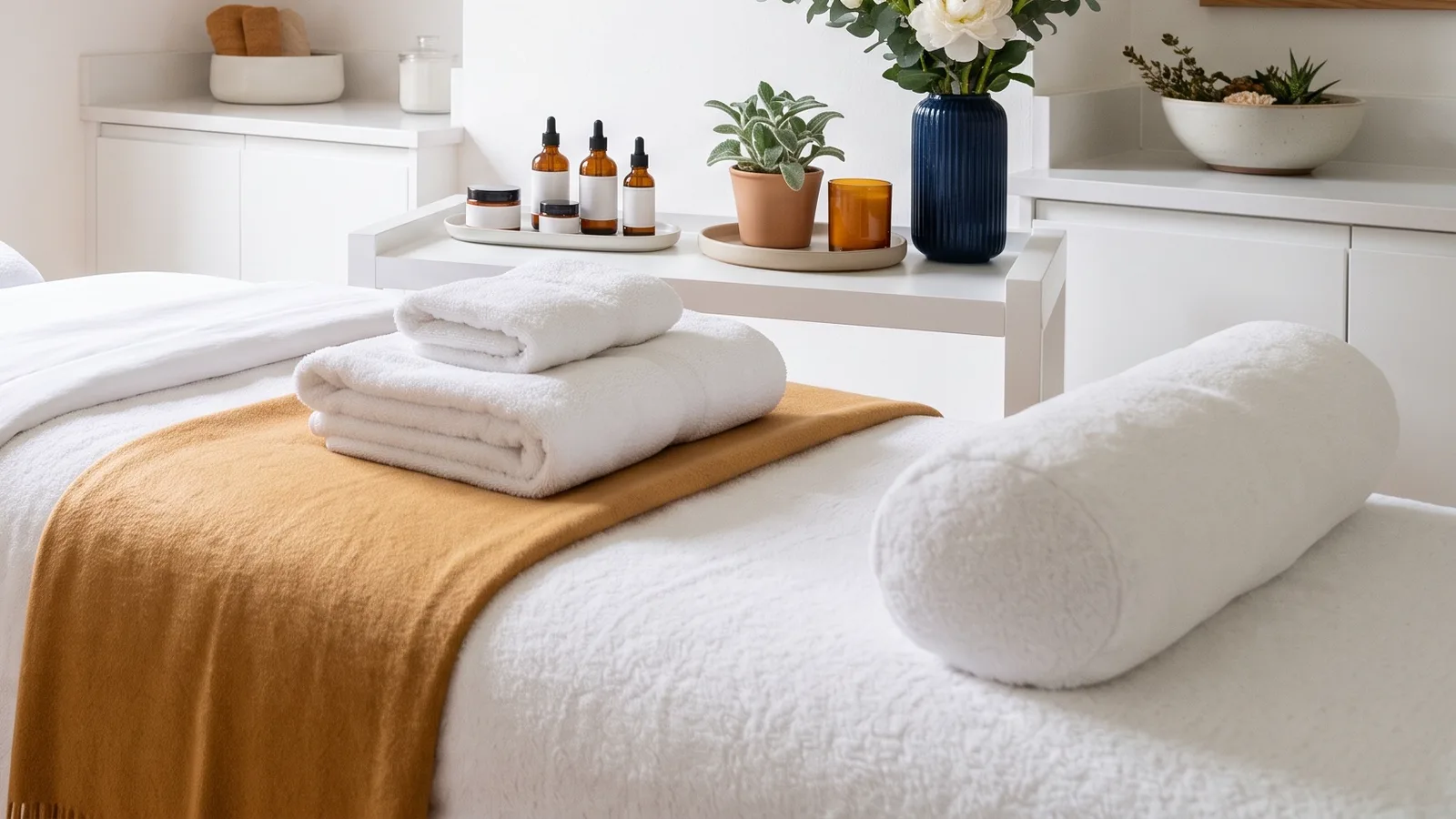
The forearm technique
The forearm gives a Lomi Lomi therapist a wide, flat surface to work with, broader than a thumb or the heel of the hand, so pressure spreads evenly instead of building up on one point. Rather than treating a shoulder, then a forearm, then a calf as separate jobs, the therapist draws long strokes that cross 3 or 4 body regions in a single sweep, for example from the sacrum across the back, over the shoulder and down into the arm. A stroke like that can run 60 to 90 centimetres, several times the 20 to 30 centimetres a classical massage typically covers over one muscle. The name itself is usually translated as to knead, to rub or to work in and out, a description that fits the folding, wave-like movement better than a single English word does.
Gentle joint mobilisations are folded into the same rhythm, and many studios keep a steady beat of music running through the 60 to 90 minutes so the pace and the strokes stay connected. Oil is used generously throughout, classically a coconut base warmed slightly before use; a full-body treatment takes roughly 100 to 150 millilitres, compared with 10 to 20 millilitres in a classical full-body massage. Because the forearm rarely lifts off the skin between strokes, the pace tends to sit lower than in a classical massage, with fewer, longer movements rather than many short ones over a single muscle.
| Point | Lomi Lomi | Classical massage |
|---|---|---|
| Main tool | Forearms for most of the session | Hands and thumbs |
| Typical duration | 60 to 90 minutes | 60 to 90 minutes |
| Oil per session | 100 to 150 millilitres | 10 to 20 millilitres |
| Stroke length | Up to 60 to 90 centimetres in one sweep | Usually 20 to 30 centimetres over one muscle |
| Draping | 1 sheet, only the worked area uncovered | Towel kept over the untreated side |
| Best suited to | A feeling of flow across the whole body | Targeted work on a single tight spot |
How a session runs
A standard booking runs 60 to 90 minutes, and the traditional Hawaiian form can extend to 2 hours or longer, with pauses built into the rhythm rather than treated as an interruption. Draping usually follows a simple rule: 1 sheet covers the body, and only the section being worked is uncovered at a time. Front and back are each worked in full before the session ends, so nothing gets a quick pass while another area gets the detail.
Because the pressure is spread across a wide area rather than concentrated under a thumb, Lomi Lomi tends to feel softer than a classical massage even when the pressure itself is considerable. That makes it a poor match for anyone chasing 1 specific knot in a shoulder or calf; a classical full-body massage or a targeted aromatherapy massage reaches a single tight spot more directly. As with other oil-heavy treatments such as Abhyanga, plan on old clothes and a towel for your hair, since coconut oil needs 1 to 2 washes to rinse out fully.
In Western Europe a 60 to 90 minute session typically costs 70 to 150 EUR, in North America 90 to 180 USD, and most therapists suggest once a week for 4 to 6 weeks if the aim is a lasting change in how tense the body feels rather than a single relaxing afternoon.
Where the practice comes from
Lomi Lomi developed within Native Hawaiian healing, where a kahuna (a trained specialist) combined bodywork with breath and a wider sense of connection to family and place; it was practised at home across generations, not only booked as a spa service, and it sat alongside other family roles rather than as 1 isolated skill. That background still shapes how it is taught today, and it is part of why a single session is still built around 1 continuous rhythm rather than a menu of separate techniques.
In the Papakolea neighbourhood of Honolulu, a community programme called Na Lomilomi O Papakolea has trained lomilomi practitioners since 1992, described in a peer-reviewed case report as the first self-sustaining programme of its kind to place Native Hawaiian practitioners and Western clinicians in the same clinic. On a larger scale, the World Health Organization's 2019 global report on traditional and complementary medicine drew on data from 179 Member States, one sign that a practice such as Lomi Lomi sits inside a worldwide pattern rather than standing alone.
Outside Hawaii, Lomi Lomi is offered as a wellness treatment, not a regulated medical therapy. In the United States, for instance, a massage therapist needs a licence or certification in 45 states and the District of Columbia, a general rule for hands-on bodywork that covers the therapist rather than the Hawaiian technique specifically; massage use itself has grown, from 4.8 percent of US adults in 2002 to 10.9 percent in 2022.
Allergies, cosmetics and when to wait
Because so much oil is used, an allergy is worth raising before the first stroke. Coconut is the classic base; a therapist switches to macadamia, sunflower or jojoba oil for anyone with a coconut or fragrance sensitivity, and a full ingredient list has to sit on the packaging of any product used. The same caution applies to the scented oils covered in the aromatherapy massage guide.
A session is postponed with a fever above 38 degrees Celsius, an acute inflammation, a fresh injury or surgery, or any suspicion of deep vein thrombosis. Risk factors for the latter include an age over 60, a flight longer than 4 hours, 3 or more days of bed rest and the 6 weeks after childbirth; anyone treated for a clot usually stays on blood thinners for at least 3 months and is advised to wait 2 weeks after starting them before flying. In pregnancy most studios adjust the positioning or delay Lomi Lomi until after the first 12 weeks.
Questions to ask before you book
- Ask whether the base oil is coconut, and which alternative (macadamia, sunflower or jojoba) is used for allergies.
- Confirm the session length: 60 to 90 minutes is standard, and the traditional form can run 2 hours or longer.
- Say if you take blood thinners, had surgery in the last 3 months, or sat on a flight over 4 hours recently, so the therapist can check for thrombosis risk first.
- Mention pregnancy. Most studios adjust the positioning after the first 12 weeks and avoid deep pressure on the legs.
- Bring old clothes and a hair towel; coconut oil takes 1 to 2 washes to rinse out fully.
Frequently asked
What does Lomi Lomi work with?
Mainly the forearms. Their broad surface spreads pressure evenly, so a single stroke can run 60 to 90 centimetres, for example from the sacrum across the back to the shoulder.
How is it different from a classical massage?
It moves in long strokes across several body regions at once instead of working one muscle at a time. A session still runs 60 to 90 minutes like most classical massages, but feels less like a series of separate steps.
Does it feel gentle?
It often feels softer because the pressure is spread over a wide area, though the pressure itself can be considerable, similar in force to a classical massage.
When is it not the right choice?
If you want focused work on 1 tight spot, such as a single shoulder knot, a classical massage suits that better than a whole-body technique built around long sweeps.
Who should postpone a session?
Anyone with a fever above 38 degrees Celsius, an acute inflammation, a fresh injury or a suspected deep vein thrombosis. In pregnancy the position and pressure are usually adjusted from the 12th week onward.
Is Lomi Lomi regulated as medicine?
No. Outside Hawaii it is offered as a wellness treatment, and the therapist's general massage licence, required in 45 US states and the District of Columbia, covers the hands rather than the Hawaiian technique itself.
Sources
- Massage Therapy: What You Need To Know (NCCIH, National Institutes of Health) · general safety profile, licensing in 45 states plus the District of Columbia, use by 10.9 percent of US adults in 2022 versus 4.8 percent in 2002
- Dillard AY, Carpenter DA, Mau EF, Kekauoha BP. Case report from the field: integrating Hawaiian and Western healing arts in Papakolea. Hawaii J Med Public Health 2014;73(12 Suppl 3):26-28 · Na Lomilomi O Papakolea training programme founded in 1992, described as the first self-sustaining lomilomi training programme integrating Native Hawaiian and Western practitioners
- Deep vein thrombosis (DVT) (NHS) · risk rises after age 60, on flights over 4 hours, after 3 or more days in bed and for 6 weeks after childbirth; anticoagulant treatment usually runs at least 3 months
- Traditional, Complementary and Integrative Medicine (World Health Organization) · WHO's 2019 global report on traditional and complementary medicine drew on data from 179 Member States
Read on
 Massage
Abhyanga: warm oil, long strokes
Massage
Abhyanga: warm oil, long strokes
 Massage
Full-body massage: five strokes, one sequence
Massage
Full-body massage: five strokes, one sequence
 Massage
Aromatherapy massage: dilution decides
Massage
Aromatherapy massage: dilution decidesTools that fit
This guide is for general information. It does not replace medical or professional cosmetic advice or an examination.