Spa day: the order makes the difference
A spa day works best in a fixed order: warm the body for 20 to 45 minutes first, book the main treatment for 60 to 90 minutes second, then rest for 20 to 30 minutes before you leave. Reversing that sequence, a sauna straight after a deep massage for example, puts a double load on the same circulation, and stacking more than 2 intensive treatments into one visit adds strain rather than benefit. Skip the closing rest and you cut the visit short exactly where the body does its recovery, not during the heat or the pressure itself.
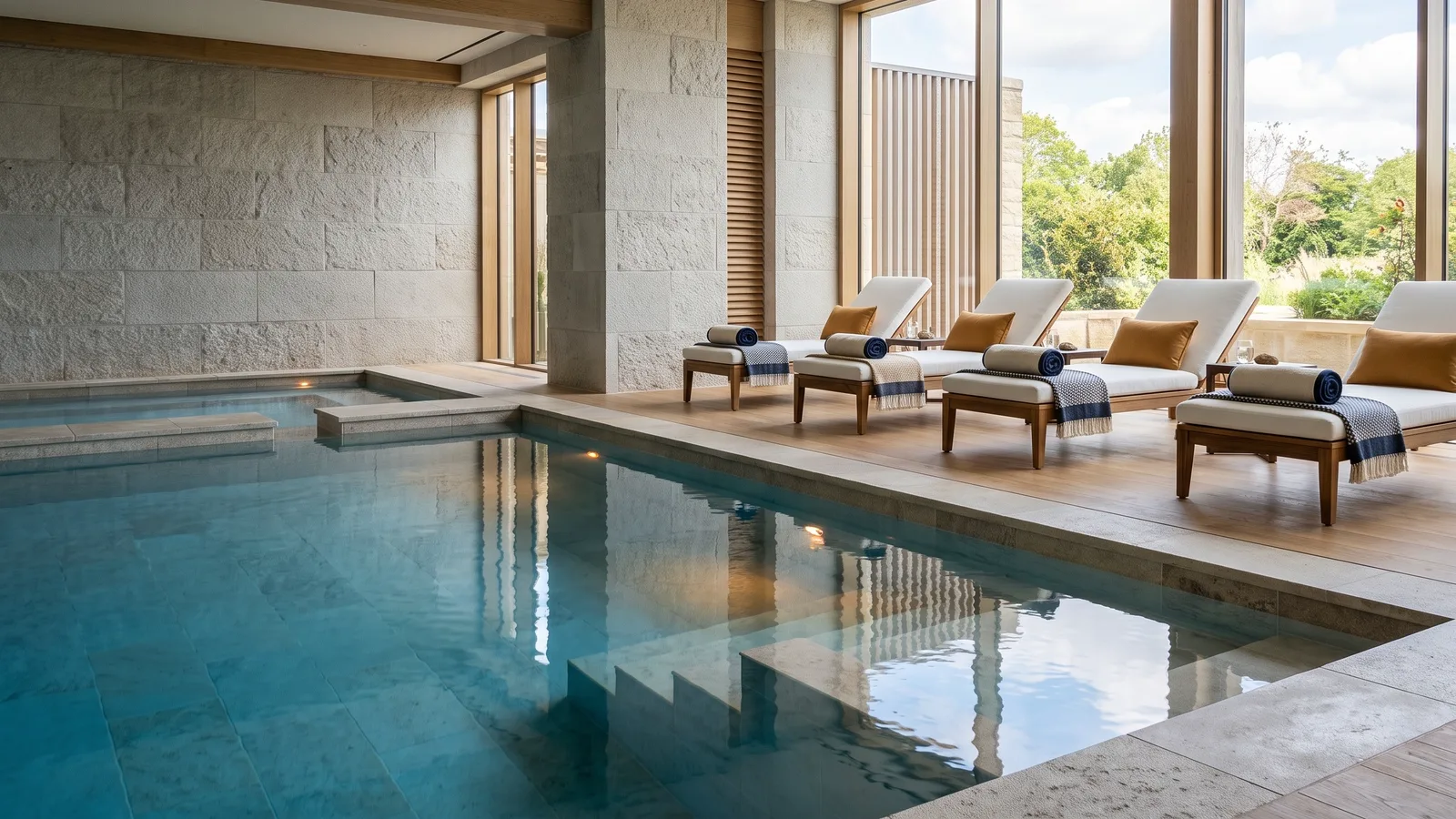
The order that makes a spa day work
Heat opens, treatment works, rest closes: that is the entire logic of a spa day. A warm-up phase of 20 to 45 minutes, a sauna round, a steam room or a body scrub, raises skin temperature and loosens muscle, so a massage or a facial that follows absorbs products better and needs less force to reach the same result. Book the warm-up first and the main treatment, typically 60 to 90 minutes for a full-body massage or a facial with extraction, second.
The part most people cut is the last one: 20 to 30 minutes of rest at the end, lying down, wrapped, not on the way to the changing room. That is not padding, it is the window in which heart rate and blood pressure, both raised by heat and by firm pressure on the tissue, settle back towards baseline. Leave straight from the massage table into a car or a train and half the physiological work of the visit happens somewhere less useful than a lounger.
| Step | What happens | Duration | Why |
|---|---|---|---|
| 1 | Warm-up: sauna, steam or a body scrub | 20 to 45 minutes | Warms skin and muscle before the main treatment |
| 2 | Short pause, water | at least 10 minutes | Lets heart rate begin to settle |
| 3 | Main treatment: massage or facial | 60 to 90 minutes | The intensive part of the visit |
| 4 | Second treatment, only if needed | 30 to 60 minutes | The daily ceiling is 2 intensive treatments |
| 5 | Closing rest | 20 to 30 minutes | Heart rate and blood pressure return to baseline |
| Between treatments | Rest and fluids | at least 30 minutes, 1 to 2 glasses of water | Avoids stacking heat and pressure loads |
| Across the whole day | Fluid intake | 6 to 8 glasses as a baseline | More is needed around heat, less around a desk |
Two treatments is the daily ceiling
One intensive treatment plus a warm-up and a rest is a full day for the circulation; a second intensive treatment, a hot stone massage after a facial, say, is the most that fits without turning benefit into strain. Between the two, at least 30 minutes of rest and 1 to 2 glasses of water are not optional, because both a sauna round and a deep massage move fluid and raise heart rate, and stacking them close together compounds the load instead of spreading it.
Some combinations do not work at any spacing. A sauna round straight after an intensive massage taxes the circulation twice in quick succession. A body scrub followed immediately by a sauna irritates skin that has just lost its top layer. A facial with extraction followed by a steam room keeps freshly opened pores exposed to heat and humidity at the point where they are most reactive. None of these 3 combinations is dangerous in the way a medical contraindication is, but all 3 trade a better result for a worse one.
A practical structure for a half-day visit: 20 to 45 minutes of warm-up, a pause of at least 10 minutes, 60 to 90 minutes for the main treatment, and 20 to 30 minutes of rest at the end. That totals roughly 2 to 3 hours, which happens to sit close to the general guidance of 6 to 8 glasses of fluid across a normal day: on a spa day, more of that quota lands in the hours around the visit than around a desk.
What the heat actually does to the body
The numbers behind the pacing advice come from studies on sauna bathing rather than spa marketing. In a trial with 22 healthy female students aged 18 to 27, 20 minutes at 80 °C raised heart rate from about 79 to 114 beats per minute; the same 20 minutes at 120 °C pushed heart rate to about 121 beats per minute, and 3 of the 22 participants lost consciousness during the session. The researchers' conclusion was specific: 80 °C suits someone who uses a sauna occasionally, 120 °C does not, and confusion or nausea are the warning signs that come before fainting, not after.
A separate cohort of 1,688 adults followed for a median of 15 years found the opposite pattern for people who go regularly: compared with 1 sauna session a week, 4 to 7 sessions a week were linked to a 77 percent lower rate of cardiovascular death, and higher weekly minutes in the sauna tracked with a lower death rate too, 9.6 per 1,000 person years at 15 minutes or less a week against 5.1 per 1,000 person years above 45 minutes. That is a finding about years of habit, not about 1 visit, and the same paper notes that people prone to a sudden drop in blood pressure on standing should still be cautious and drink enough.
Put the 2 studies together and the practical rule follows: occasional visitors keep the temperature moderate, around 80 °C rather than the hottest setting on offer, keep each round to about 15 to 20 minutes, and use the same 20 to 30 minute rest at the end that a massage needs, partly in a cool room and, if the spa offers it, a short 1 minute cold rinse, the same cooling step used in that trial's recovery protocol.
When to skip the heat, and what alcohol does
Some conditions rule out the heat part of a spa day outright: fever, an acute infection, an acute inflammation with swelling, a suspected blood clot, blood pressure that is not yet under control, and heart disease without a doctor's sign-off. In the first 12 weeks of pregnancy, saunas, steam rooms and hot pools are best avoided altogether, and later in pregnancy most spas keep the temperature well below the sauna range and shorten the time; a hydrotherapy pool, for comparison, is usually held at or below 35 °C rather than the 40 °C some hot tubs reach. None of this rules out the rest of the day: a facial, a manicure or a gentle massage without heat still works.
Alcohol is the detail most spa days get wrong. A glass of wine with lunch before an afternoon in the sauna adds the same vasodilation and the same drop in blood pressure that the heat is already producing, on top of a lower ability to notice dizziness or nausea before it becomes a fall. The straightforward fix is timing: move the drink to the end of the day, after the last rest phase, and treat water, 1 to 2 glasses after each warm phase, as the drink that actually belongs to a spa day.
Before you book a two-treatment day
- Fever, a cold or any acute infection in the last few days? Reschedule the whole visit, not just the sauna.
- Blood pressure not yet under control, or heart disease without a doctor's sign-off? Skip the heat, keep any massage gentle.
- In the first 12 weeks of pregnancy, or unsure later on? Ask for pregnancy-safe treatments and leave out saunas, steam rooms and hot pools.
- One calf that is swollen, warm or painful? That needs a doctor, not a spa.
- Planning wine with lunch? Move it to after the last rest phase, alcohol and heat lower blood pressure the same way.
- Already booked 2 intensive treatments? Leave at least 30 minutes and a drink of water between them, and stop there.
Frequently asked
Should heat come before or after a massage?
Before. 20 to 45 minutes of sauna, steam or a scrub warms the skin and muscle so the treatment that follows works better; a sauna straight after an intensive massage instead loads the same circulation twice in a row.
How many treatments fit into one spa day?
2 intensive treatments is a sensible ceiling, with at least 30 minutes and a glass of water between them. More does not add benefit, it adds strain on the same circulation.
Why does the closing rest period matter so much?
It is the 20 to 30 minutes in which heart rate and blood pressure, both raised by heat and by pressure, return to baseline. Skipping it does not remove the treatment's effect, it just moves the recovery somewhere less comfortable.
Is a spa day safe during pregnancy?
Saunas, steam rooms and hot pools are best avoided in the first 12 weeks and kept brief and cool later on; a facial, a manicure or a gentle massage without heat is usually fine. Check with a midwife or doctor for anything beyond that.
Can I have a glass of wine on a spa day?
Better to wait. Alcohol lowers blood pressure in much the same way heat does, and combining the two makes dizziness and fainting more likely; save the drink for after the last rest phase.
Sources
- NHS: Water, drinks and nutrition · 6 to 8 cups or glasses of fluid a day as a general guide, more when active, in the heat, pregnant, breastfeeding or unwell
- Kunutsor SK et al.: Sauna bathing is associated with reduced cardiovascular mortality and improves risk prediction in men and women (BMC Medicine, 2018, via PubMed Central) · 1,688 adults, 15-year median follow-up; 4 to 7 sessions a week linked to a 77 percent lower cardiovascular mortality rate versus 1 session a week; mortality 9.6 per 1,000 person-years at 15 minutes or less weekly against 5.1 above 45 minutes; caution advised for people prone to orthostatic hypotension
- The influence of extreme thermal stress on the physiological and psychological characteristics of young women who sporadically use the sauna: practical implications for the safe use of the sauna (via PubMed Central) · 22 healthy women aged 18 to 27; 20 minutes at 80 degrees C raised heart rate from about 79 to 114 beats per minute, 120 degrees C raised it to about 121 and caused 3 of 22 to faint; recommends 80 degrees C rather than 120 degrees C for occasional sauna users
Read on
 Massage
Full-body massage: five strokes, one sequence
Massage
Full-body massage: five strokes, one sequence
 Massage
Hot stone massage: basalt stores the heat
Massage
Hot stone massage: basalt stores the heat
 Wellness
Spa gift vouchers: expiry dates and the rules that apply
Wellness
Spa gift vouchers: expiry dates and the rules that applyTools that fit
This guide is for general information. It does not replace medical or professional cosmetic advice or an examination.