Lymphatic drainage: gentle, because the system lies just under the skin
Manual lymphatic drainage stays so light because the vessels it moves fluid through sit just 1 to 2 millimetres under the skin, immediately below the point where a firmer stroke would flatten them instead of emptying them. It is a recognised therapy for lymphoedema, a condition estimated to affect 140 to 250 million people worldwide, most often after cancer surgery, radiotherapy, injury or a related fat disorder called lipoedema. A course usually runs in short, frequent sessions of 30 to 60 minutes, followed by compression that holds the result between appointments.
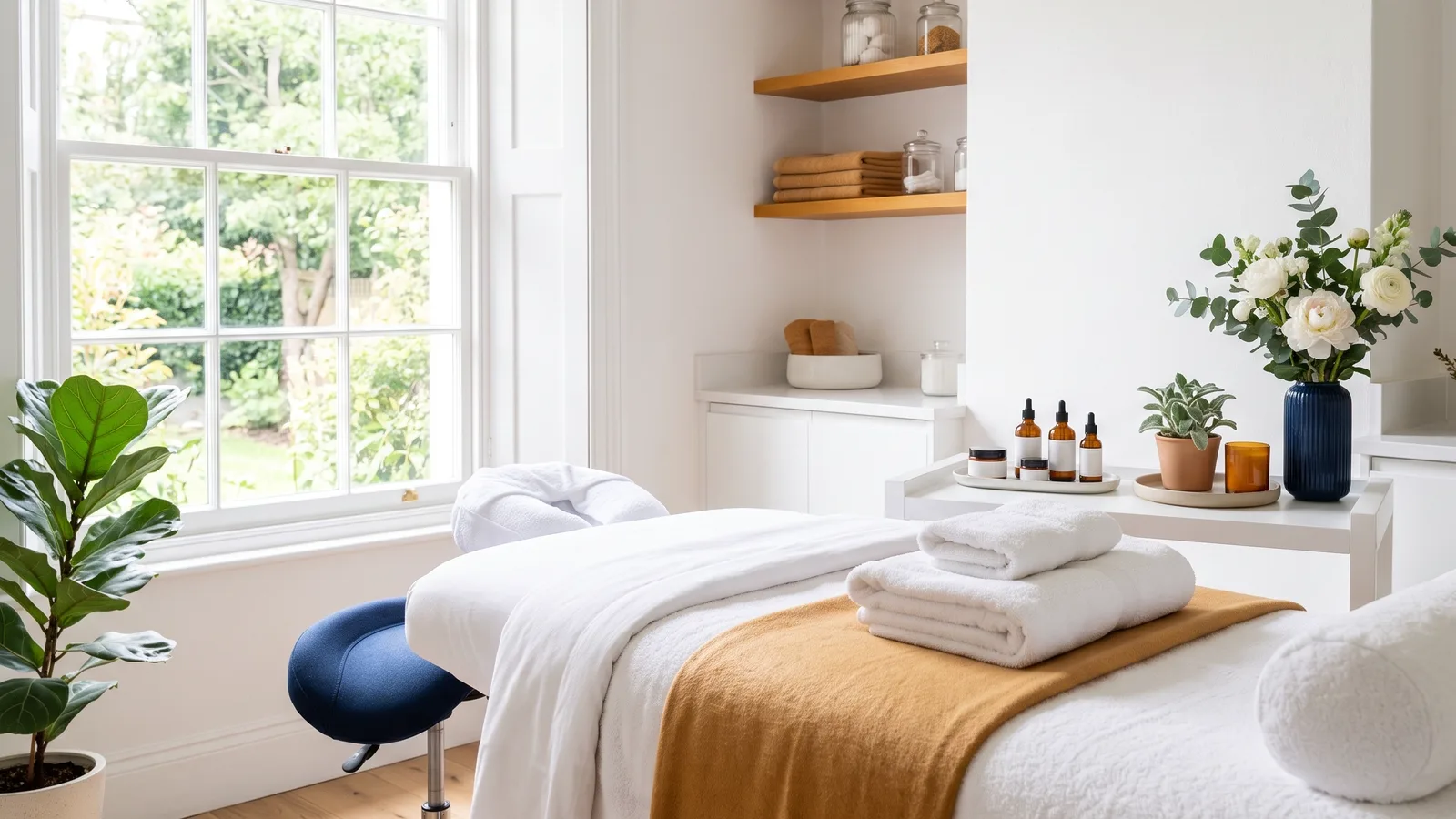
Why the pressure has to stay so light
The lymph vessels that carry fluid away from the tissues are not buried like veins. The smallest of them, the initial lymphatics, sit directly under the dermis, roughly 1 to 2 millimetres below the surface, and their walls are thin, with overlapping flaps between the cells that act like one-way valves, letting protein-rich fluid in but not back out. A firm stroke that would barely register on a vein or a muscle is enough to press these delicate vessels shut, which stops fluid movement rather than helping it. That is why the technique uses slow, circular, pumping movements with a pressure closer to stroking skin than to any deep tissue work, and why a session that leaves someone sore the next day has almost certainly been done too hard.
The order of the strokes matters as much as the pressure. A session starts at the neck and trunk, where lymph re-enters the bloodstream through 2 main ducts near the collarbone, the thoracic duct on the left and the right lymphatic duct on the right, and only moves out to a swollen arm, leg or the face once those exit routes are clear. Working the swollen area first, before the drainage points are open, simply pushes fluid into a system that has nowhere to put it. The approach was developed in the 1930s by Emil and Estrid Vodder, and the Vodder, Foldi and Casley-Smith methods taught today still follow that same neck-first sequence.
| Group or step | Approximate figure |
|---|---|
| People living with lymphoedema worldwide | 140 to 250 million |
| Share of cases that are secondary, not inherited | more than 90 percent |
| Adults affected in the United States | 8 to 10 million, about 3 percent |
| Breast cancer survivors who develop arm lymphoedema | 10 to 40 percent |
| People after combined head and neck cancer treatment | up to 90 percent |
| People living with lymphoedema in the UK | more than 200,000 |
| Typical single treatment session | 30 to 60 minutes |
| Usual length of the intensive treatment phase | 2 to 4 weeks |
Who this treatment is actually for
Lymphoedema, the swelling that manual lymphatic drainage is designed to treat, affects an estimated 140 to 250 million people worldwide. More than 90 percent of cases are secondary, meaning the lymphatic system was damaged by surgery, radiotherapy, infection or injury rather than inherited. Primary lymphoedema, caused by a fault in how the lymphatic system develops before birth, is far rarer, at around 1 in 100,000 people, and makes up less than 10 percent of cases in the United States.
Cancer treatment is the most common trigger. Between 10 and 40 percent of breast cancer survivors develop arm swelling after lymph nodes are removed and the area is irradiated, and the risk climbs further with each additional node taken and with slow wound healing or a wound infection afterwards. The figure rises to as high as 90 percent in people treated with combined therapy for head and neck cancer. In the United Kingdom, more than 200,000 people live with lymphoedema. A related condition, lipoedema, almost exclusively affects women, usually starting soon after puberty or during another hormonal shift such as pregnancy, and causes disproportionate swelling in the legs or arms while the hands and feet keep a normal shape.
What a course of treatment looks like
Clinics generally work in 2 phases. The intensive phase combines manual lymphatic drainage with multilayer bandaging, skin care and exercise, usually on 3 to 5 days a week for 2 to 4 weeks, aiming to bring the swelling down as far as it will go before it is locked in place. The bandaging in this phase is deliberately inelastic, so it resists the muscle when it pushes outward but offers little resistance when the limb relaxes, which keeps fluid moving during ordinary daily movement. The maintenance phase that follows swaps the daily bandaging for a compression garment and a simplified self-massage routine, kept up for as long as the condition needs it, often for years.
A single session typically lasts 30 to 60 minutes. Compression garments are graded by the pressure they apply, commonly Class 1 at 20 to 30 mmHg or Class 2 at 30 to 40 mmHg, and are usually worn for most of the day, sometimes up to 23 hours, since the tissue tends to refill within hours once the garment comes off. Slow, deep breathing between sessions is a low-effort way to help the process along, since the pressure changes it creates in the chest and abdomen help draw lymph toward the neck the same way the opening strokes of a session do. The Breathing Studio walks through a simple paced pattern for exactly that.
When to wait, and where wellness ends
Manual lymphatic drainage is paused rather than started when there is an active infection or cellulitis in the area to be treated, untreated heart failure, or a suspected acute deep vein thrombosis, since pushing fluid through an inflamed or clotted area can make things worse rather than better. A new swelling that affects only 1 side of the body and has not been examined belongs in front of a doctor first, ideally with an ultrasound scan to rule out a clot, before any massage of any kind is attempted.
Spa and beauty treatments that borrow the name lymphatic drainage are usually a lighter, more relaxing version aimed at puffiness or a heavy feeling rather than a diagnosed condition, and that is a reasonable use of the technique on its own terms provided the skin is healthy and none of the warning signs above apply. What is worth checking before you book, medical or otherwise, is whether the practitioner trained in one of the recognised methods and how many sessions they expect the course to run, since a plan with no clear end point is usually a sign the swelling was never properly assessed in the first place.
Checks before you book a session
- Ask whether the practitioner trained in a recognised method such as Vodder, Foldi or Casley-Smith.
- Confirm the session length, usually 30 to 60 minutes, before you book.
- Mention any recent infection, unexplained swelling or heart condition first.
- Ask what compression garment or bandage you should wear afterwards.
- If the swelling is new and on 1 side only, get it examined before any massage.
Frequently asked
Is manual lymphatic drainage the same as a normal massage?
No. It uses very light pressure aimed at vessels that sit only 1 to 2 millimetres under the skin, not at muscle, and firmer pressure works against it rather than for it.
Why does a session start at the neck instead of the swollen area?
Because that is where lymph re-enters the bloodstream through 2 main ducts near the collarbone. Clearing that exit route first gives fluid pushed in from the arm or leg somewhere to go.
Will health insurance or a public health service pay for it?
Coverage varies by country and usually depends on a doctor prescribing it for a diagnosed condition such as lymphoedema, so check the specific rules that apply where you live.
What should I do after a session?
Wear whatever compression garment or bandage was recommended, since tissue can refill within hours once it comes off, and keep moving gently rather than staying still.
When should treatment wait?
During an active infection in the area, untreated heart failure, a suspected blood clot, or any new one-sided swelling that has not been examined by a doctor yet.
Sources
- StatPearls: Lymphedema, National Library of Medicine · global prevalence, breast and head and neck cancer risk, complete decongestive therapy phases
- NHS: Lymphoedema, treatment · manual lymphatic drainage, compression, decongestive lymphatic therapy
- NHS: Lymphoedema, overview · causes, primary versus secondary, UK prevalence
- DermNet: Lipoedema · who lipoedema affects, role of compression and manual lymph drainage
Read on
 Skin and Cosmetics
Puffy eyes: cold works, caffeine helps
Skin and Cosmetics
Puffy eyes: cold works, caffeine helps
 Massage
Full-body massage: five strokes, one sequence
Massage
Full-body massage: five strokes, one sequence
 Skin and Cosmetics
Cellulite: the connective tissue question
Skin and Cosmetics
Cellulite: the connective tissue questionTools that fit
This guide is for general information. It does not replace medical or professional cosmetic advice or an examination.