Guerlain and the blue hour: L’Heure Bleue revisited
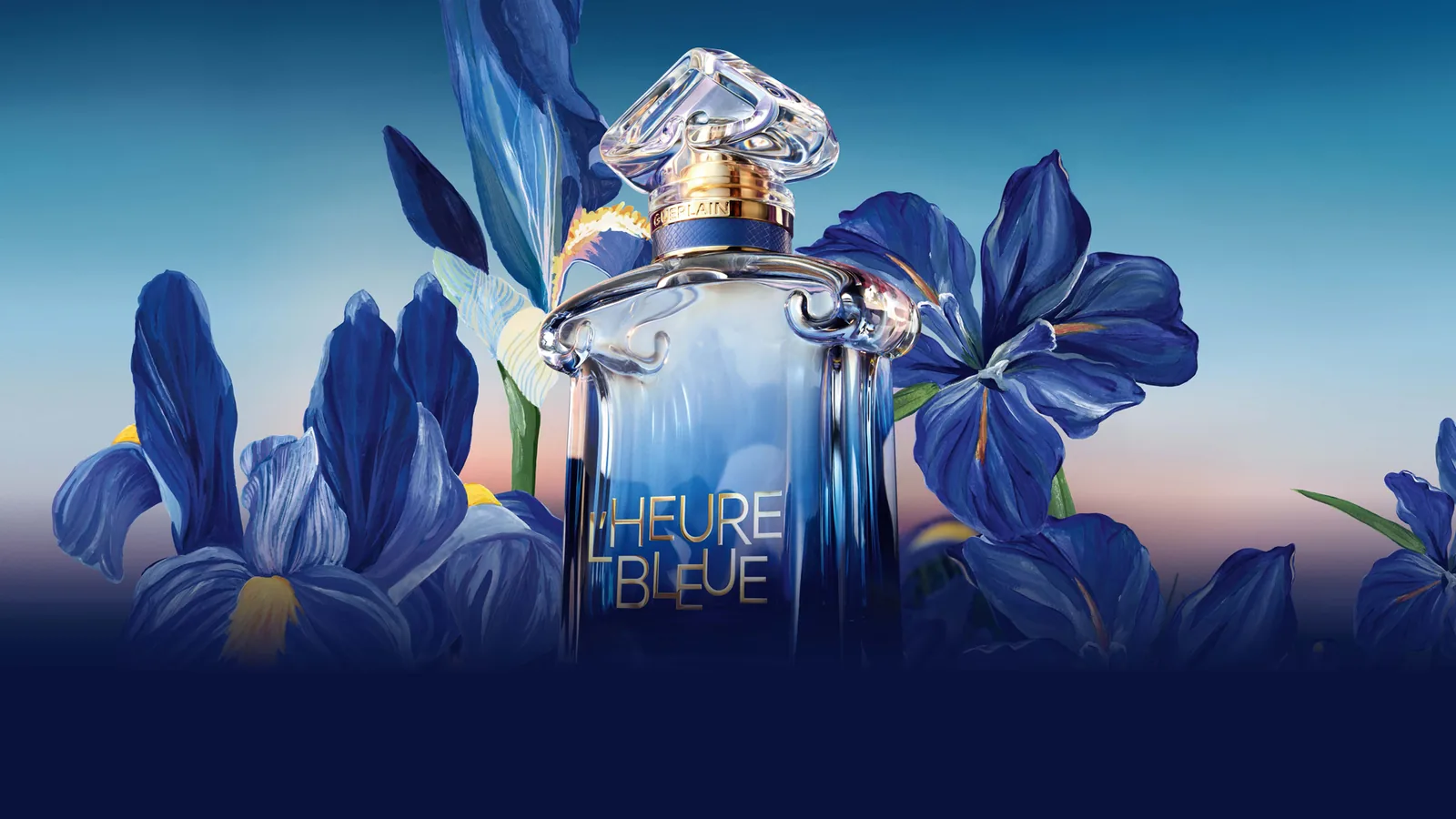
Guerlain is revisiting one of its oldest classics: L’Heure Bleue, created by Jacques Guerlain in 1912, receives a new interpretation by Delphine Jelk, the house’s Director of Fragrance Creation. The main novelty is an exclusive iris tincture that gives the heart of iris and orange blossom a fresh, airy side. The bottle keeps its famous shape, now in a blue gradient, and it can be refilled.
A moment between day and night
The story of this fragrance begins on a bridge. In 1912 Jacques Guerlain was captivated by the particular light he saw from the Pont-Neuf in Paris, that fleeting moment when day turns into night. It became L’Heure Bleue, a fragrance meant to capture an atmosphere rather than a place. More than a century later, Guerlain is returning to that legacy.
The person in charge is Delphine Jelk, who leads fragrance creation at the house as Director of Fragrance Creation. Her brief is the same for every new version of a classic, and still a delicate one: the character of the original has to remain recognisable while the fragrance finds a new expression.
What a tincture is
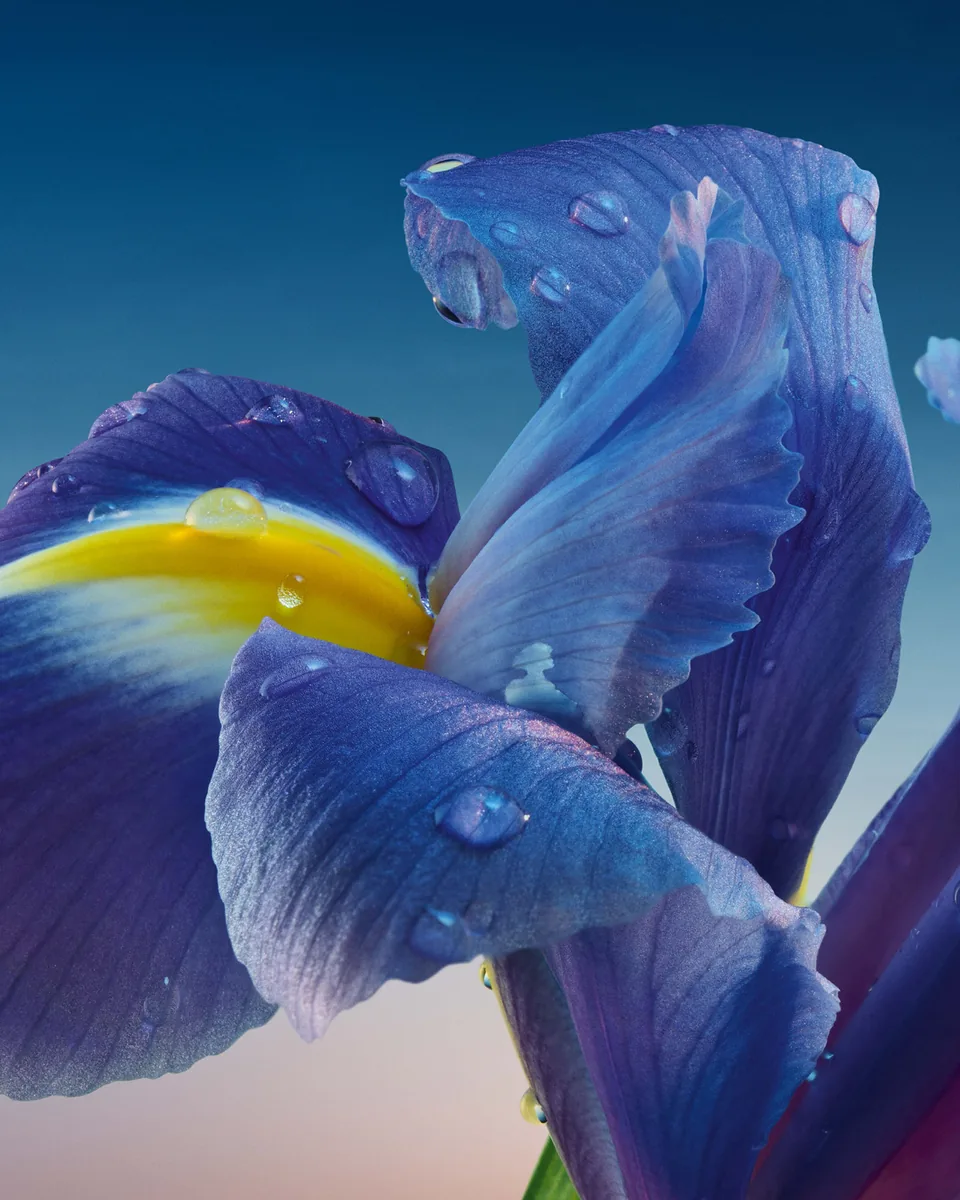
At the core of the new version is a raw material developed exclusively for the house: an iris tincture. It starts from carefully selected rhizomes, the rootstocks of the iris, grown in Italy. The result represents three years of research with the teams at Guerlain’s Orphin manufacture.
The method itself is old and belongs to the traditional techniques of the house. Tincturing means macerating a natural raw material in alcohol until the alcohol has taken on its scent. With iris, this brings out a fresh, airy facet. Anyone who mainly knows iris as a powdery note meets a different side of the same plant here.
Iris, orange blossom and vanilla
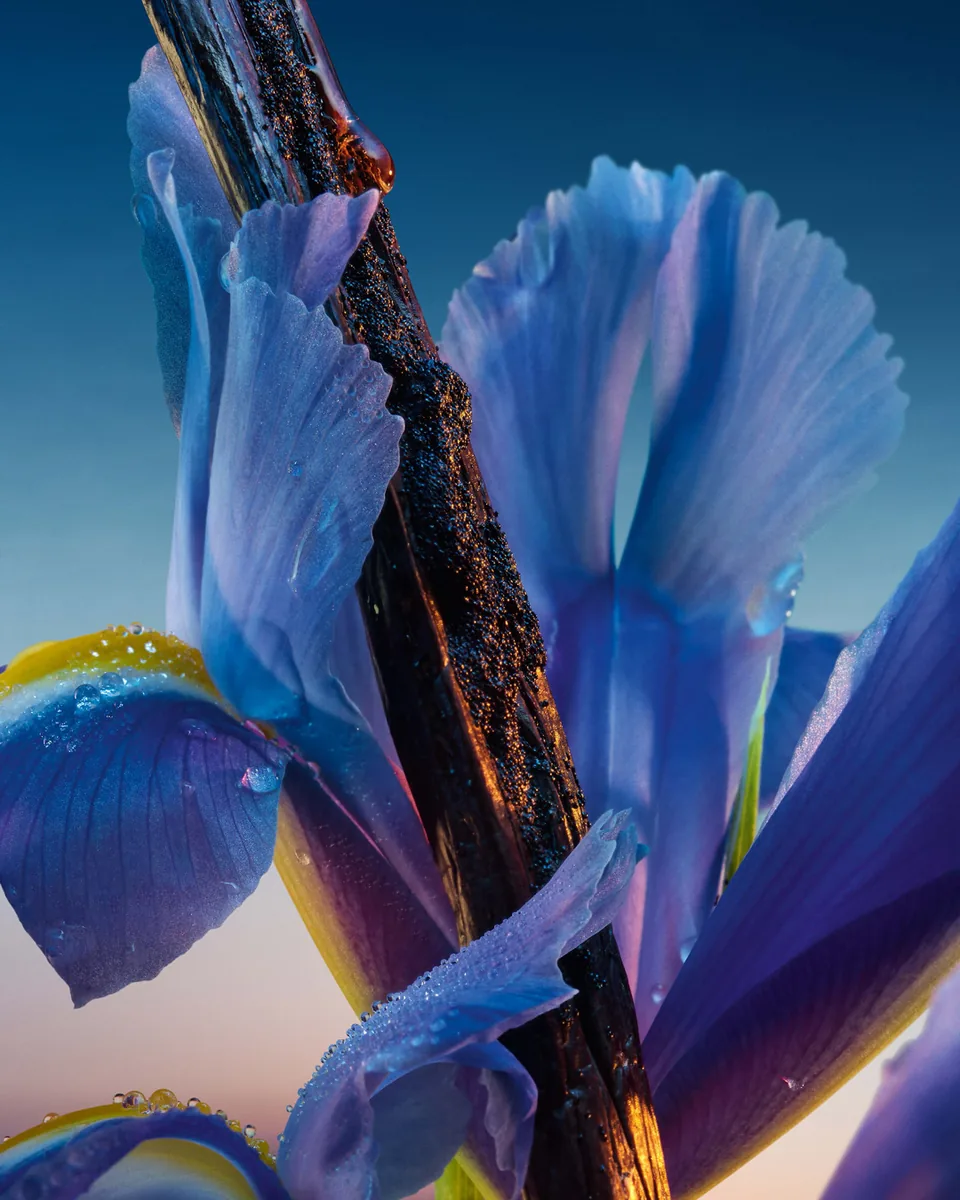
The structure of the fragrance barely changes. Iris and orange blossom remain at the heart of the composition. Vanilla, one of the signature ingredients of the Guerlain palette, adds its characteristic warmth and depth. The distinctive character of the original stays intact, only its expression is new.
In practice, a reinterpretation is judged like any other fragrance: only on your own skin does it show how it develops over the hours. A blotter tells you about the first minutes, your skin tells you the rest. If your skin is sensitive, try a new fragrance on a small area first, such as the inside of the elbow, before applying it generously.
A bottle in the blue of dusk
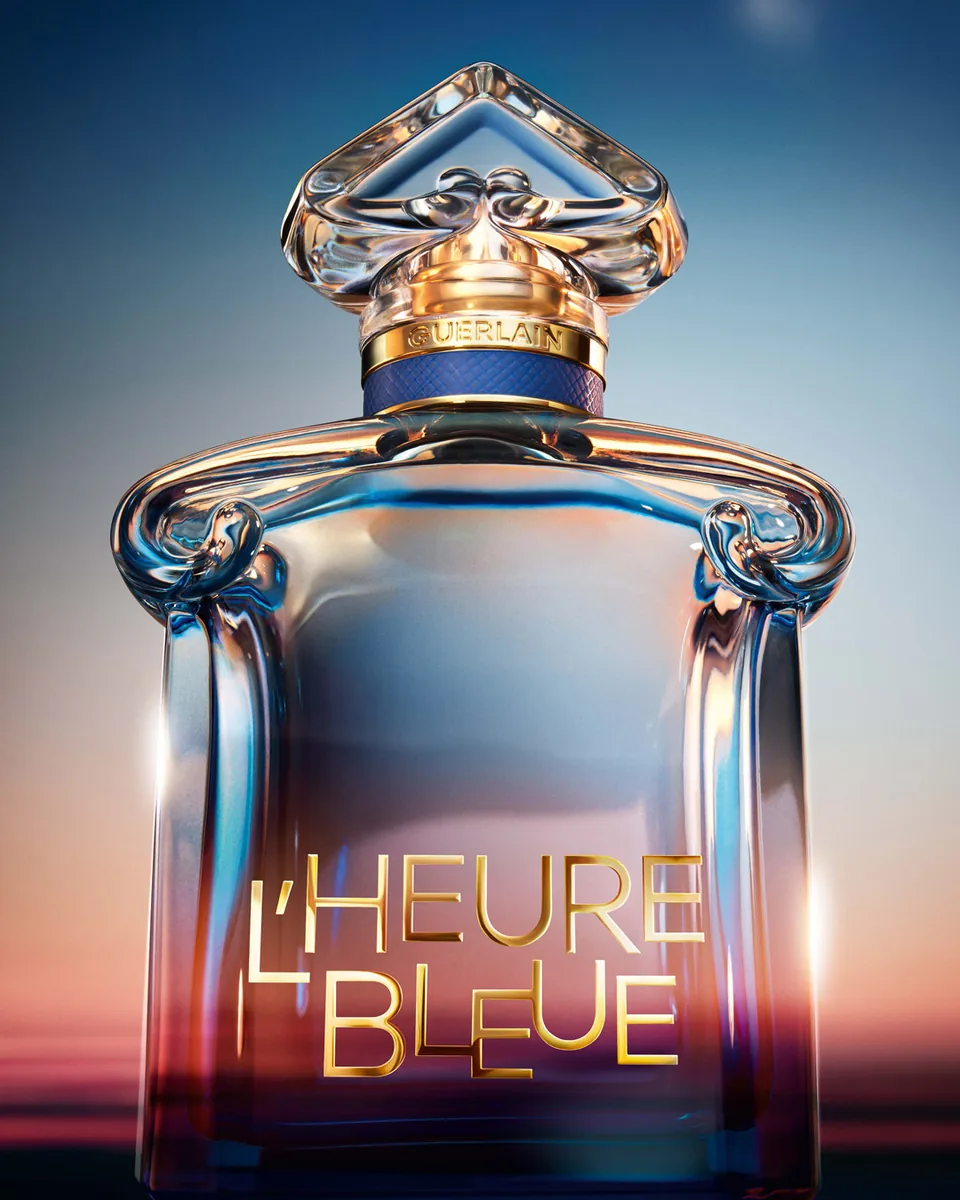
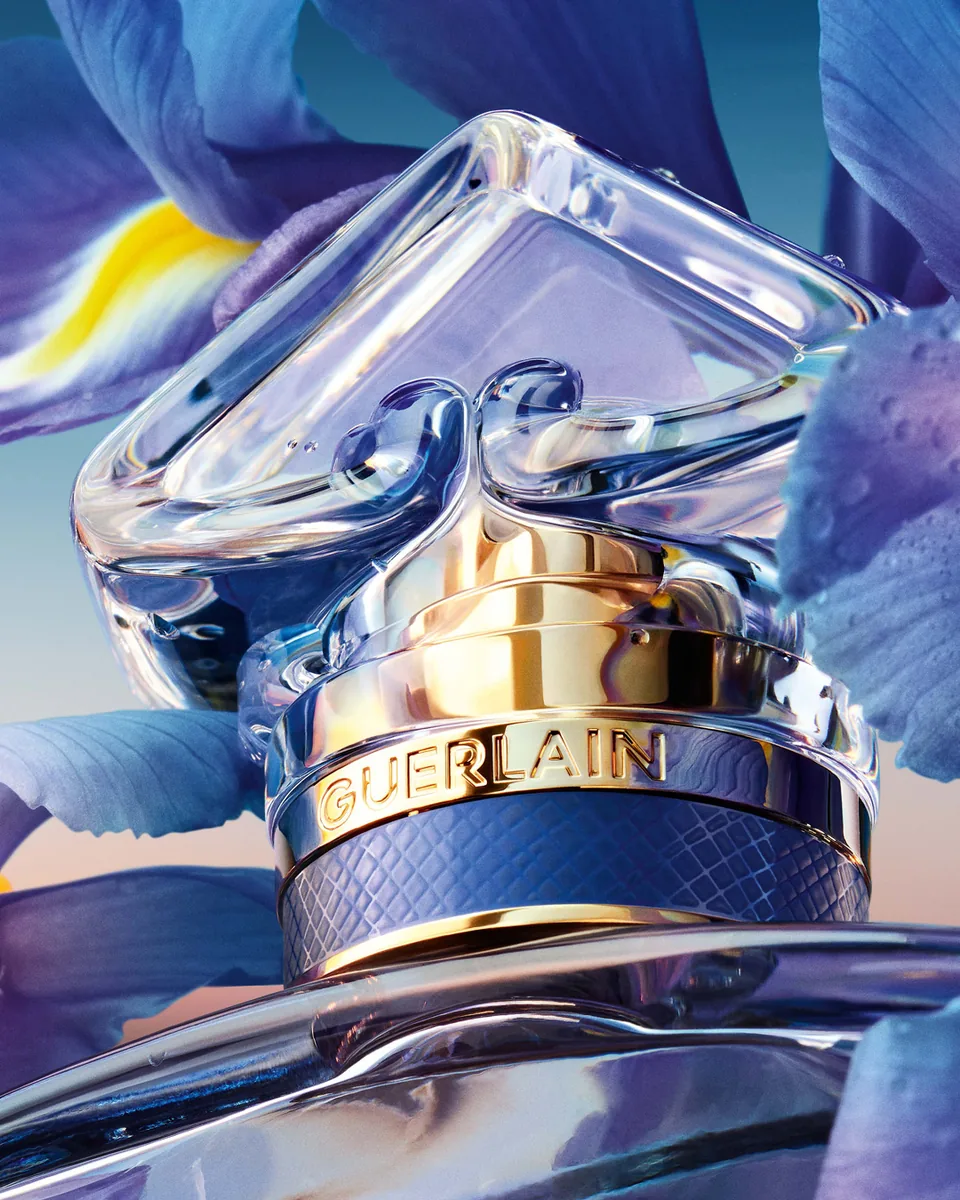
The bottle also links heritage and renewal. Its silhouette in the shape of an inverted heart was designed by Georges Chevalier for Baccarat in 1912. The new version comes in a blue gradient inspired by the sky at blue hour. Gold accents, a textured blue ring and refined lines give it a contemporary elegance.
For anyone who pays attention to packaging, there is a tangible point: the bottle is refillable and designed to last. The original L’Heure Bleue does not disappear, by the way. It remains part of the house’s Légendaires collection, with the new interpretation alongside it.
What remains open
Details on price, concentration, bottle sizes and the launch date in individual markets were not available to the editors at the time of writing.
Read on
 Photo: Acqua di Parma
From the houses
Acqua di Parma La Caletta: a summer collection with Laura Gonzalez
 Photo: Kenzo Parfums
From the houses
Kenzo Parfums L’Eau Ambrée: 90 per cent natural origin
This article presents a new launch and is for general information. The photos are supplied by the respective brand.